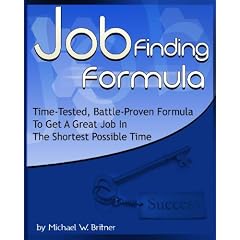
A job search is really a sales effort. I know most people cringe when they hear that, but you may as well admit that it is true. Many things in life are sales efforts. Convincing your children to help with chores is sales. Talking your spouse into going to a movie that you want to see is sales. Presenting yourself to a decision maker in such a way as to have them offer you a job, or refer you to someone else who might, is sales.
Closely related to sales is marketing. You might look at your relationship building letter and resume as marketing, your relationship building meeting as a hybrid of marketing and sales, and your job interview as pure sales. Two things that the Job Finding Formula insists that you do when presenting yourself are to be honest and never be negative. Since we are looking at the resume, at least for this example, as marketing, let me present an example of a well known marketing campaign that might appear to be dishonest at first glance, but actually is very truthful.
Which brand of coffee is “Mountain Grown”? Folger’s, right? Everybody know that! Folgers has used that slogan and images of mountains to sell a lot of coffee. Did you know that ALL coffee is grown in the mountains? Well, it is! This is because coffee plants need to be grown in tropical or sub-tropical environments at high altitudes. Is that dishonest? Not at all, Folger’s is “Mountain Grown”. If they said that Folger’s was the only mountain grown coffee, that would be lying. It’s not their fault if coffee drinkers don’t know that everyone else’s coffee is also grown there.
I am not necessarily trying to get you to develop an achievement event that is something that everyone else in your position has done and make a big deal out of it. I just wanted to demonstrate that even when “all things are equal” there are ways to make yourself stand out. Using this technique will show that you understand the job requirement that relates to your achievement event. Think how much more you can be noticed by presenting your achievements in a proper way.
Michael Britner
Job Finding Master
Monday, December 29, 2008

Monday, December 22, 2008
A Message To Job Finding Formula Users
It's nearly the end of the year and if you are out of work, looking for a job, and using the Job Finding Formula, it's really difficult to stay motivated toward the actions that will help you find the job that best suits you.
But, it is very important that you do exactly that. Do not fall prey to the "Dissatisfaction Dip"!
You know what that is, right?
It's that period of time, after you have discovered a "secret" that most other people do not know and the motivation to follow the steps that you know will work wears off and the excitement you felt when you first discovered the secret fades away. While you know that the plan you have set in action will work, you are wondering if you have what it takes to carry it out.
We've all experienced the Dissatisfaction Dip. I can't count the times that I have embarked on a new weight loss plan and started to see success, when I became dissatisfied and lapsed back into my old habits of overeating and not exercising. I knew that eating properly and working out were the keys to success, but I began to doubt my ability to stay with the program.
Just because the excitement cools off and you say, "This is really hard work!" doesn't mean that the initial inspiration was wrong. The dream is still alive, it really is and you've just got to stick with it! The methods presented in Job Finding Formula have worked for me and so many other people that I know they will work for you if you keep trying and don't give up hope.
Here are some tips for managing and overcoming the dissatisfaction dip:
Tip #1: The honeymoon will come to end. Own it. But that doesn't mean that the relationship has to end. Be prepared to keep the romance alive just like you're willing to do with any meaningful commitment in your life. Decide now that it's going to take a firm resolve to weather the Dissatisfaction Dip.
Tip #2: Keep your eye on the original inspiration. If you knew that the principles presented in Job Finding Formula were right when you started out, if the vision was exciting and motivating; then it's still right today. In short, don't lose the vision because part of the journey isn't fun.
Tip #3: Remember that every great accomplishment comes only after a real price is paid. Sure, success can come quickly, but it does not always come overnight. And it always comes with challenges, doubts, and trials. The Dissatisfaction Dip is a period of real discouragement. Don't give in!
Tip #4: Lean on someone. Talk to someone you trust. Perhaps a minister, your spouse, partner, significant other, or a trusted friend who will listen to you and confirm that this experience is normal, expected and necessary. Let them give you a boost and the motivation you need to push through the "less fun" moments.
In their book, Success Through A Positive Mental Attitude, Napoleon Hill, who wrote Think and Grow Rich, and W. Clement Stone discuss "Inspirational Dissatisfaction". That is the state of mind where a person becomes so dissatisfied with his current circumstances that he is inspired to change them.
Accept that you'll face the Dissatisfaction Dip; become inspired by that dissatisfaction, embrace that inspiration, keep your head up, keep your eye on the original vision, and find moral support ...trust me, I've been there and the end result is well worth it!
Michael Britner
Job Finding Master
But, it is very important that you do exactly that. Do not fall prey to the "Dissatisfaction Dip"!
You know what that is, right?
It's that period of time, after you have discovered a "secret" that most other people do not know and the motivation to follow the steps that you know will work wears off and the excitement you felt when you first discovered the secret fades away. While you know that the plan you have set in action will work, you are wondering if you have what it takes to carry it out.
We've all experienced the Dissatisfaction Dip. I can't count the times that I have embarked on a new weight loss plan and started to see success, when I became dissatisfied and lapsed back into my old habits of overeating and not exercising. I knew that eating properly and working out were the keys to success, but I began to doubt my ability to stay with the program.
Just because the excitement cools off and you say, "This is really hard work!" doesn't mean that the initial inspiration was wrong. The dream is still alive, it really is and you've just got to stick with it! The methods presented in Job Finding Formula have worked for me and so many other people that I know they will work for you if you keep trying and don't give up hope.
Here are some tips for managing and overcoming the dissatisfaction dip:
Tip #1: The honeymoon will come to end. Own it. But that doesn't mean that the relationship has to end. Be prepared to keep the romance alive just like you're willing to do with any meaningful commitment in your life. Decide now that it's going to take a firm resolve to weather the Dissatisfaction Dip.
Tip #2: Keep your eye on the original inspiration. If you knew that the principles presented in Job Finding Formula were right when you started out, if the vision was exciting and motivating; then it's still right today. In short, don't lose the vision because part of the journey isn't fun.
Tip #3: Remember that every great accomplishment comes only after a real price is paid. Sure, success can come quickly, but it does not always come overnight. And it always comes with challenges, doubts, and trials. The Dissatisfaction Dip is a period of real discouragement. Don't give in!
Tip #4: Lean on someone. Talk to someone you trust. Perhaps a minister, your spouse, partner, significant other, or a trusted friend who will listen to you and confirm that this experience is normal, expected and necessary. Let them give you a boost and the motivation you need to push through the "less fun" moments.
In their book, Success Through A Positive Mental Attitude, Napoleon Hill, who wrote Think and Grow Rich, and W. Clement Stone discuss "Inspirational Dissatisfaction". That is the state of mind where a person becomes so dissatisfied with his current circumstances that he is inspired to change them.
Accept that you'll face the Dissatisfaction Dip; become inspired by that dissatisfaction, embrace that inspiration, keep your head up, keep your eye on the original vision, and find moral support ...trust me, I've been there and the end result is well worth it!
Michael Britner
Job Finding Master
Thursday, December 18, 2008
Should you consider "Work at home" as an option?
The new unemployment numbers mean nothing if YOU do not have a job.
The news that jobless claims have dropped as noted in this Yahoo article should encourage you to work even harder to find that job that is right for you.
However, please be very cautious about "work at home" schemes that require you to put up money in advance. I am an advocate of entrepreneurial efforts and encourage you to consider starting your own business. However, you must face the economic, financial reality of your chances for success. If someone wants to "sell" you on their program to make you rich, you should ask yourself why? If they have the "secret" to making all that money, why don't they just do it themselves? Why do they want to sell the "secret". Believe me, I have been a sucker for lots of those schemes and hope that you will not fall victim to them, especially when you are out of work and most vulnerable to con artists.
Please see the article from the National Consumer's League Internet Fraud Watch.
Be encouraged by the new jobless numbers and let them give you hope to change your own situation. One year ago this week, I lost my job (see the November 20 post to this blog). I have been there. When that happened, I was in total shock. I did not tell my wife for three days. My stomach was tied in knots. I had trouble sleeping at night. Then, I took my own advice that I had begun to put into writing over five years earlier. Within a week, I had a job equal to the one I had just lost.
I believe in you! Believe in yourself and you will succeed. As we enter this last week before CHRISTmas, I pray that you will also believe in something greater than yourself. Whatever you conceive that to be, know that the universe was designed for each of us to succeed. Belief in that principle is the fundamental to making it happen. Acting on that belief is the key to opening the door to success.
Michael Britner
Job Finding Master
The news that jobless claims have dropped as noted in this Yahoo article should encourage you to work even harder to find that job that is right for you.
However, please be very cautious about "work at home" schemes that require you to put up money in advance. I am an advocate of entrepreneurial efforts and encourage you to consider starting your own business. However, you must face the economic, financial reality of your chances for success. If someone wants to "sell" you on their program to make you rich, you should ask yourself why? If they have the "secret" to making all that money, why don't they just do it themselves? Why do they want to sell the "secret". Believe me, I have been a sucker for lots of those schemes and hope that you will not fall victim to them, especially when you are out of work and most vulnerable to con artists.
Please see the article from the National Consumer's League Internet Fraud Watch.
Be encouraged by the new jobless numbers and let them give you hope to change your own situation. One year ago this week, I lost my job (see the November 20 post to this blog). I have been there. When that happened, I was in total shock. I did not tell my wife for three days. My stomach was tied in knots. I had trouble sleeping at night. Then, I took my own advice that I had begun to put into writing over five years earlier. Within a week, I had a job equal to the one I had just lost.
I believe in you! Believe in yourself and you will succeed. As we enter this last week before CHRISTmas, I pray that you will also believe in something greater than yourself. Whatever you conceive that to be, know that the universe was designed for each of us to succeed. Belief in that principle is the fundamental to making it happen. Acting on that belief is the key to opening the door to success.
Michael Britner
Job Finding Master
Monday, December 15, 2008
Body Language
Your body language, the nonverbal message you present, begins to speak for you even before you say hello during your interview. An opinion is already beginning to take shape by the time you speak your first word. You have prepared your answers to the interview questions that you know will come, but the interviewer is already judging you by your posture, general appearance, and whether you seem relaxed or nervous.
A UCLA study revealed that the impact of a performance was based 7 percent on the words used, 38 percent on voice quality and 55 percent on nonverbal communication.
Just think about the teachers, sports figures, or other speakers you have heard. Do you remember more the ones that just give out information or those that were more entertaining and used actions to express themselves? Please do not think that I am advocating that you do a song and dance or tell jokes during an interview. However, you should make a real effort to be interactive and show enthusiasm at the proper times. As you make the point that you really want to work at this company, show some energy and smile. Practice using simple gestures to emphasize things that you want to stand out.
Some Body Language Tips:
Michael Britner
Job Finding Master
A UCLA study revealed that the impact of a performance was based 7 percent on the words used, 38 percent on voice quality and 55 percent on nonverbal communication.
Just think about the teachers, sports figures, or other speakers you have heard. Do you remember more the ones that just give out information or those that were more entertaining and used actions to express themselves? Please do not think that I am advocating that you do a song and dance or tell jokes during an interview. However, you should make a real effort to be interactive and show enthusiasm at the proper times. As you make the point that you really want to work at this company, show some energy and smile. Practice using simple gestures to emphasize things that you want to stand out.
Some Body Language Tips:
- Handshake: When the interviewer extends his or her hand you have a great opportunity to make a good first impression. You should practice making a firm handshake without exerting extra force. Your hand should be warm and dry. If possible, visit the restroom or break-room and place your hands under cold water. Of course, if your hands are naturally cold, use warm water.
- Eye contact: Without staring, look the interviewer in the eye. Look at his or her hands occasionally when he or she is speaking. Do not look around the room while you are talking, as you will appear uncomfortable and lacking in confidence.
- Fidgeting: I naturally have a bad habit of making a sound by drawing air through my front teeth and clicking a pen. This is annoying and I've learned not to do that in meetings, although I still drive my wife crazy when I do it at home in relaxed moments. Try to notice habits similar to those that you may have such as playing with your hair, tapping your feet, or touching parts of your body like ears or your nose.
- Posture: While you should not assume a stiff, military drill posture, do not slouch. You will demonstrate energy and enthusiasm by maintaining an erect posture while standing and sitting. Practice in a mirror before the interview.
- Gestures: Keep gestures natural, use them to emphasize your words without overwhelming what you are saying. Do not put your hands on your mouth while talking. Use a mirror or video to judge how you look while talking.
Michael Britner
Job Finding Master
Friday, December 12, 2008
Job Finding Myth
The Myth: You have to know someone really important to get a great job.
Consider this. An executive was seeking a job and had exhausted all the means he could think of to find a job. Then he learned about the Job Finding Formula method of building relationships based on contacting all the people that you know. Even though he really didn’t think it would be helpful to him, he followed the concept and wrote a letter describing his situation to a waitress that he knew.
Now, here is a man who is accustomed to earning a six-figure salary. How in the world could a waitress help him find any job, let alone a great job? Well, he was desperate and without any other recourse left, he wrote letters to everyone he could think of including the waitress. It so happened that she had overheard a conversation among some high level executives that indicated to her they had a serious problem that she thought the man might be able to solve. The man took her advice, contacted the executives and landed a job as an assistant vice president.
I cannot emphasize this enough, ask everyone that you know for advice and assistance. Aunt Marie, Uncle George, all of the teachers who you remember, classmates, former co-workers, etc. While you may think that Uncle George does not have the influence to get you a job, you may not know all the people that he knows. Maybe his neighbor, one of his former co-workers or bosses, or someone he knows from church or a social organization may turn out to be your link to the best job. Remember the waitress!
It is estimated that each of us knows at least 250 people who know us by our name. Each of these people also know at least 250 people. Of course, there will be some overlap because some of our 250 will be the same as theirs. However, this is still a large group of contacts.
You can also do some research and find the names and addresses of people whom you do not know, but you believe may be able to help you. Combine those people with the list of people you know. Your list will grow as you think of people you have omitted or learn of new people that you want to add. Continue to work your way down the list, don't give up hope, and you will find that great job!
Michael Britner
Job Finding Master
Consider this. An executive was seeking a job and had exhausted all the means he could think of to find a job. Then he learned about the Job Finding Formula method of building relationships based on contacting all the people that you know. Even though he really didn’t think it would be helpful to him, he followed the concept and wrote a letter describing his situation to a waitress that he knew.
Now, here is a man who is accustomed to earning a six-figure salary. How in the world could a waitress help him find any job, let alone a great job? Well, he was desperate and without any other recourse left, he wrote letters to everyone he could think of including the waitress. It so happened that she had overheard a conversation among some high level executives that indicated to her they had a serious problem that she thought the man might be able to solve. The man took her advice, contacted the executives and landed a job as an assistant vice president.
I cannot emphasize this enough, ask everyone that you know for advice and assistance. Aunt Marie, Uncle George, all of the teachers who you remember, classmates, former co-workers, etc. While you may think that Uncle George does not have the influence to get you a job, you may not know all the people that he knows. Maybe his neighbor, one of his former co-workers or bosses, or someone he knows from church or a social organization may turn out to be your link to the best job. Remember the waitress!
It is estimated that each of us knows at least 250 people who know us by our name. Each of these people also know at least 250 people. Of course, there will be some overlap because some of our 250 will be the same as theirs. However, this is still a large group of contacts.
You can also do some research and find the names and addresses of people whom you do not know, but you believe may be able to help you. Combine those people with the list of people you know. Your list will grow as you think of people you have omitted or learn of new people that you want to add. Continue to work your way down the list, don't give up hope, and you will find that great job!
Michael Britner
Job Finding Master
Wednesday, December 10, 2008
Letters in response to advertisements
I want to take this opportunity to thank Henry Hinton, host of the most popular morning radio show in our area that is heard on WTIB 94.3 FM (also seen on Greenville, NC's SuddenLink cable channel 7), for allowing me to talk with his audience today about Job Finding Formula.
The letter below is an example of one that you should consider sending as a cover letter with your resume when responding to a job advertisement. (Leave out the dashes (-----) between the columns. That was the only way I could make it look right in this blog format.) Using this type of cover letter will significantly increase the chances that your resume will be read and considered. Of course, please edit it to be consistent with your style and for the appropriate person and position you are applying for.
June 4, 2008
Response name in ad
address
city, state ZIP
Re: Project Manager
The specified background for a Project Manager listed in your advertisement in the May 30 edition of the Sunday Times Dominion is a remarkable match to my experience as the following comparison demonstrates:
Your Requirements (-----------------------------------) My Experience
1. ___________________(-------------------)______________________
2. ___________________(-------------------)______________________
3. ___________________(-------------------)______________________
The enclosed resume emphasizes other areas of my background that may also be of interest to you. I look forward to a personal meeting where we might discuss these.
Sincerely,
Your Name
Enclosure:
____________________________
Many other sample letters are presented in Job Finding Formula.
Michael Britner
Job Finding Master
The letter below is an example of one that you should consider sending as a cover letter with your resume when responding to a job advertisement. (Leave out the dashes (-----) between the columns. That was the only way I could make it look right in this blog format.) Using this type of cover letter will significantly increase the chances that your resume will be read and considered. Of course, please edit it to be consistent with your style and for the appropriate person and position you are applying for.
June 4, 2008
Response name in ad
address
city, state ZIP
Re: Project Manager
The specified background for a Project Manager listed in your advertisement in the May 30 edition of the Sunday Times Dominion is a remarkable match to my experience as the following comparison demonstrates:
Your Requirements (-----------------------------------) My Experience
1. ___________________(-------------------)______________________
2. ___________________(-------------------)______________________
3. ___________________(-------------------)______________________
The enclosed resume emphasizes other areas of my background that may also be of interest to you. I look forward to a personal meeting where we might discuss these.
Sincerely,
Your Name
Enclosure:
____________________________
Many other sample letters are presented in Job Finding Formula.
Michael Britner
Job Finding Master
Monday, December 8, 2008
How Employers Decide Who to Hire or Keep
In today’s economic climate it’s important to know what traits employers use to evaluate candidates for a position and how they decide which employees to keep during layoffs. As you seek your next position, either within your own company or with another employer, emphasizing these traits will be of tremendous help to those efforts.
Ability to work with others: One of the signs that employers look for is how well you can perform your assigned duties while, at the same time, not disrupting others from performing theirs. Mitigating disputes between employees is a major obstacle to managing workers. Therefore, a manager will attempt to not bring on someone who does not get along well with others. Likewise, a manger will take the first opportunity to dismiss an employee who cannot work with others.
If you find yourself in that group, then it will be to your great advantage to learn how to get your job accomplished while not upsetting others. This does not necessarily mean that your should change your attitude towards your job. In fact, it is not uncommon that your desire to do a good job is what upsets others. For example, some people will not understand why you put in extra effort to meet some deadline.
You should strive to do the best job that you can while finding a way to get along. Having done this, you can comment during a job interview or performance review, “One of my weaknesses used to be getting my co-workers to understand how important I take my assignments. However, I have now learned how to continue to pursue excellence and at the same time not step on other people’s toes.”
Punctuality: “If you are not 15 minutes early, you are late!” That was the advice that I was given in my Air Force days and it has served me well. You should always be at work early. The best way to demonstrate that you are punctual is to show up for any job interview early. The secret about this tactic is that it’s not really all for the benefit of the employer. By arriving early, you will usually have an opportunity to observe the workplace. Remember, you are not just at an interview to see if the company wants you, it’s your opportunity to see if you want to work for them.
You should make the best use of this time by observing the atmosphere in the office. Especially, notice the body language of the people you see. Listen to comments that are made while you wait. This will also give you the chance to relax and concentrate on what you want to present to the interviewer.
Cooperation: While this is closely related to working well with others, it applies more to striving to achieve the goals of the organization. This is why the Job Finding Formula methods of finding the best job are important. They help you uncover the job that best suits your talents, abilities, skills and knowledge. This will automatically place you in a position where you will want to cooperate with everyone to achieve stated organizational objectives.
Self Reliance: Employers recognize the worth of employees who understand the objective of an assignment and are able to carry it out by themselves. Effective managers know that everyone needs to be given enough information to understand what is to be accomplished and the proper training and tools to do the job. However, once that is done, they should be able to complete the task without excessive reliance on the manager or other employees. This does not mean that you should never ask for assistance, rather, that you should only do this when necessary. You should not let asking for help become a habit.
Appearance: The way your dress and present yourself is important. Many job seekers miss this and do themselves a great disservice. While today’s workplace is more casual and laid-back than that of 50 years ago, you can still make yourself stand out by presenting a clean, neat appearance. Dress appropriately for the position you are applying form. You should even “dress up” a notch or two above the position you are seeking if you can. When in doubt, be more conservative.
Courtesy: This is a way to really set yourself apart from the average job seeker. Whenever you call someone on the telephone to talk about an opportunity, always ask if this is a good time to talk. If they say it is not, then ask when you should call back. Your goal should be to put the person at ease, not place them in an uncomfortable position. Job Finding Formula teaches how to do this most effectively.
Motivation: The most successful managers know that the only true motivation is self-motivation. There is an old saying that if I want my dog to move, I have to kick him in the a_ _. If I want to get him to move tomorrow, I have to kick him again. Managers do not have the time to waste kicking employees to make them move. That is why they look for self-motivated people to fill jobs and keep those who have displayed that trait when layoffs happen.
Reliability: Can your employer rely on you to serve the best interests of the company? Have you demonstrated in the past that you are reliable? The answer to these questions is crucial to maintaining your job or being offered a new job. It should be obvious that being a person that an employer can rely upon to get the job done is a tremendous benefit. Make the most of your past experience to emphasize this trait.
Initiative: Are you a self starter? If you are, that is initiative. Employers look favorably on those employees who can recognize a problem and seek out solutions without being told to do so. This is another trait that you should seek examples of and present those examples to prospective employers during a job interview. You can learn how best to do this in Job Finding Formula.
Attitude: An employee's attitude is an extremely important aspect of the decision making process for hiring or during layoffs. Concern for whether the job get done properly, a positive outlook towards the company, and communicating those attitudes to others is very important.
Quality of work: The quality of work that you perform is another very important aspect of how employers judge you. You should keep a record of how you have contributed to high quality in your jobs. Employers recognize that producing a high volume of work is useless unless the work is done properly.
All of the above traits are important to employers when deciding who to hire and who to layoff. You should review your resume and letters and attempt to work as many of these traits into them as possible.
Michael Britner
Job Finding Master
Ability to work with others: One of the signs that employers look for is how well you can perform your assigned duties while, at the same time, not disrupting others from performing theirs. Mitigating disputes between employees is a major obstacle to managing workers. Therefore, a manager will attempt to not bring on someone who does not get along well with others. Likewise, a manger will take the first opportunity to dismiss an employee who cannot work with others.
If you find yourself in that group, then it will be to your great advantage to learn how to get your job accomplished while not upsetting others. This does not necessarily mean that your should change your attitude towards your job. In fact, it is not uncommon that your desire to do a good job is what upsets others. For example, some people will not understand why you put in extra effort to meet some deadline.
You should strive to do the best job that you can while finding a way to get along. Having done this, you can comment during a job interview or performance review, “One of my weaknesses used to be getting my co-workers to understand how important I take my assignments. However, I have now learned how to continue to pursue excellence and at the same time not step on other people’s toes.”
Punctuality: “If you are not 15 minutes early, you are late!” That was the advice that I was given in my Air Force days and it has served me well. You should always be at work early. The best way to demonstrate that you are punctual is to show up for any job interview early. The secret about this tactic is that it’s not really all for the benefit of the employer. By arriving early, you will usually have an opportunity to observe the workplace. Remember, you are not just at an interview to see if the company wants you, it’s your opportunity to see if you want to work for them.
You should make the best use of this time by observing the atmosphere in the office. Especially, notice the body language of the people you see. Listen to comments that are made while you wait. This will also give you the chance to relax and concentrate on what you want to present to the interviewer.
Cooperation: While this is closely related to working well with others, it applies more to striving to achieve the goals of the organization. This is why the Job Finding Formula methods of finding the best job are important. They help you uncover the job that best suits your talents, abilities, skills and knowledge. This will automatically place you in a position where you will want to cooperate with everyone to achieve stated organizational objectives.
Self Reliance: Employers recognize the worth of employees who understand the objective of an assignment and are able to carry it out by themselves. Effective managers know that everyone needs to be given enough information to understand what is to be accomplished and the proper training and tools to do the job. However, once that is done, they should be able to complete the task without excessive reliance on the manager or other employees. This does not mean that you should never ask for assistance, rather, that you should only do this when necessary. You should not let asking for help become a habit.
Appearance: The way your dress and present yourself is important. Many job seekers miss this and do themselves a great disservice. While today’s workplace is more casual and laid-back than that of 50 years ago, you can still make yourself stand out by presenting a clean, neat appearance. Dress appropriately for the position you are applying form. You should even “dress up” a notch or two above the position you are seeking if you can. When in doubt, be more conservative.
Courtesy: This is a way to really set yourself apart from the average job seeker. Whenever you call someone on the telephone to talk about an opportunity, always ask if this is a good time to talk. If they say it is not, then ask when you should call back. Your goal should be to put the person at ease, not place them in an uncomfortable position. Job Finding Formula teaches how to do this most effectively.
Motivation: The most successful managers know that the only true motivation is self-motivation. There is an old saying that if I want my dog to move, I have to kick him in the a_ _. If I want to get him to move tomorrow, I have to kick him again. Managers do not have the time to waste kicking employees to make them move. That is why they look for self-motivated people to fill jobs and keep those who have displayed that trait when layoffs happen.
Reliability: Can your employer rely on you to serve the best interests of the company? Have you demonstrated in the past that you are reliable? The answer to these questions is crucial to maintaining your job or being offered a new job. It should be obvious that being a person that an employer can rely upon to get the job done is a tremendous benefit. Make the most of your past experience to emphasize this trait.
Initiative: Are you a self starter? If you are, that is initiative. Employers look favorably on those employees who can recognize a problem and seek out solutions without being told to do so. This is another trait that you should seek examples of and present those examples to prospective employers during a job interview. You can learn how best to do this in Job Finding Formula.
Attitude: An employee's attitude is an extremely important aspect of the decision making process for hiring or during layoffs. Concern for whether the job get done properly, a positive outlook towards the company, and communicating those attitudes to others is very important.
Quality of work: The quality of work that you perform is another very important aspect of how employers judge you. You should keep a record of how you have contributed to high quality in your jobs. Employers recognize that producing a high volume of work is useless unless the work is done properly.
All of the above traits are important to employers when deciding who to hire and who to layoff. You should review your resume and letters and attempt to work as many of these traits into them as possible.
Michael Britner
Job Finding Master
Sunday, December 7, 2008
Self Assessment
You can significantly increase your ability to get the best job by looking closely at yourself before asking others to consider your qualifications.
One of the most important steps you can take as you begin to search for the best job is to make a checklist that will help you discover your strengths and weaknesses. Keep in mind that this list will not be seen by anyone but you and those few close advisors, if any, with whom you decide to share it. You may make several versions of this list, revising the content as you think of new items that you had overlooked earlier and as you look at the existing items in light of new knowledge you may gain.
It has been my experience, in dealing with many people, that we all tend to look at the things we have done and knowledge we possess as being inferior. Nothing could be farther from the truth. This fact was made clear to me back in the 1980’s. I found myself out of work for seven months. My unemployment was about to expire and I was very concerned about my financial future. An acquaintance suggested that I try offering my services as a consultant to large companies. I thought that I really didn’t have a chance of doing that because I assumed that everyone in those companies already knew what I knew and wouldn’t pay for that knowledge. However, in desperation, I gave it a try. I was completely amazed when my first contact offered me $300 per day plus expenses. This was really a lot of money in those days!
Don’t let the same type of thinking stop you from putting forth all of your experience and background to employers. You may be similarly surprised.
List your talents, abilities, skills and knowledge carefully. Once again, remember you are not going to share this evaluation with the whole world. However, this initial list will help you to decide what you will present and even who you decide to present it to. So, it is best to be completely honest, find out now how you truly feel before you end up in another job situation where you are unhappy. This may be a bit painful, but well worth it. The list should include:
Michael Britner
Job Finding Master
One of the most important steps you can take as you begin to search for the best job is to make a checklist that will help you discover your strengths and weaknesses. Keep in mind that this list will not be seen by anyone but you and those few close advisors, if any, with whom you decide to share it. You may make several versions of this list, revising the content as you think of new items that you had overlooked earlier and as you look at the existing items in light of new knowledge you may gain.
It has been my experience, in dealing with many people, that we all tend to look at the things we have done and knowledge we possess as being inferior. Nothing could be farther from the truth. This fact was made clear to me back in the 1980’s. I found myself out of work for seven months. My unemployment was about to expire and I was very concerned about my financial future. An acquaintance suggested that I try offering my services as a consultant to large companies. I thought that I really didn’t have a chance of doing that because I assumed that everyone in those companies already knew what I knew and wouldn’t pay for that knowledge. However, in desperation, I gave it a try. I was completely amazed when my first contact offered me $300 per day plus expenses. This was really a lot of money in those days!
Don’t let the same type of thinking stop you from putting forth all of your experience and background to employers. You may be similarly surprised.
List your talents, abilities, skills and knowledge carefully. Once again, remember you are not going to share this evaluation with the whole world. However, this initial list will help you to decide what you will present and even who you decide to present it to. So, it is best to be completely honest, find out now how you truly feel before you end up in another job situation where you are unhappy. This may be a bit painful, but well worth it. The list should include:
- Physical traits such as the attire you feel most comfortable in, your general physical fitness, and your tolerance of various physical requirements
- Psychological factors, are you naturally an extrovert or an introvert, do you share responsibilities well with others or work better alone, what is your maturity level, how well do you accept criticism, for example, can you accept criticism from supervisory level personnel in a constructive manner
- Social activities such as organizations of which you are a member, community service activities to which you have contributed, and recreational activities that you enjoy
- Vocational aspects such as job skills, responsibilities you have undertaken at home or school, on the job experience, and vocational training
- Educational experience, courses you have taken related to your work, your attendance record, whether you have an interest in continuing education, and are willing to meet educational requirements of the job
Michael Britner
Job Finding Master
Tuesday, December 2, 2008
What ? !
Question: What do the following companies have in common?
General Motors
Ford
Chrysler
A) They all have financial troubles, are seeking government money, and may have to lay off workers.
B) They are all advertising for open positions.
C) Both A and B.
D) None of the above.
Answer: C
Believe it or not many large companies like these that are prominently in the news are both letting people go and hiring other people at the same time! Small and medium size companies are doing the same thing.
If you do not think this is true, click on the links below:
General Motors
Ford
Chrysler
Job Finding Formula teaches you how to use this little known secret to your advantage.
Mike Britner
Job Finding Master
General Motors
Ford
Chrysler
A) They all have financial troubles, are seeking government money, and may have to lay off workers.
B) They are all advertising for open positions.
C) Both A and B.
D) None of the above.
Answer: C
Believe it or not many large companies like these that are prominently in the news are both letting people go and hiring other people at the same time! Small and medium size companies are doing the same thing.
If you do not think this is true, click on the links below:
General Motors
Ford
Chrysler
Job Finding Formula teaches you how to use this little known secret to your advantage.
Mike Britner
Job Finding Master
Subscribe to:
Posts (Atom)


 Posts
Posts

